

There are very few people who purposefully seek out a reactive dog to bring into their home – for most people, they find themselves in that scenario unexpectedly. And so their journey begins, seeking help for them and their dog, while trying to navigate a wide range of emotions about their situation.
In today’s episode, I bring in a client I worked closely with, to get her perspective on life with her reactive dog and what that journey was like, including the time we spent together.
Laura and Cali 👇🙂
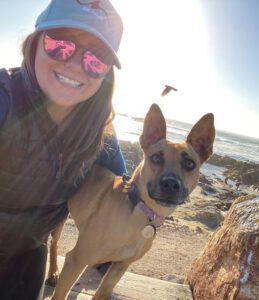
Laura and Cali
Learn more about helping reactive dogs
For Pet Professionals:
The Reactivity, Refined course and mentorship is designed to transform the way you work with reactive dogs, and help you connect the dots with your reactivity cases to help your clients reach their fullest potential. Registration for the March 2026 cohort opens February 15th, sign up to join the waitlist and get $50 off, AND be the first in line to register. With only 15 spots available, they go quickly!
For Pet Parents:
Struggling with your reactive dog? I guide pet parents toward real, lasting solutions by asking the right questions and addressing what’s often overlooked. Ge the help you need today.
Transcript
Jessica: [00:00:00] I’m Jessica Wheatcraft and this is Rethinking Reactivity, a podcast designed to educate, empower, and equip the modern handler of reactive dogs. Whether you have a reactive dog or you help people with their reactive dogs, you’re in the right place.
Jessica: There’s a story that plays out time and time again with a vast majority of my clients, and it’s this, they spend weeks or months getting ready to bring a dog into their lives, and they are ecstatic when they find them. They envisioned a life full of adventures with their dog. And then at some point their dog starts to show reactive behaviors on leash and the dream they had for their dog comes crashing down.
Jessica: And that is a hard place to be, to have an expectation for the kind of dog and lifestyle you wanted, [00:01:00] and then to come to the realization that it’s not what you have. Just plain sucks. It really freaking sucks. So much of my job as a behavior consultant and trainer is helping my clients navigate a scenario that they didn’t sign up for but happen to be in.
Jessica: It’s never just about training the dog. It’s about supporting both ends of the leash and helping them find ways to enjoy their life together again. In today’s episode, I’m bringing in one of my clients who I worked really closely with and whose dog made incredible progress. I thought it would be helpful for listeners to hear what it’s like from a client’s perspective to have a reactive dog and what that training journey was like for them.
Jessica: If you’re a pet parent, I think you’re gonna find this both relatable and inspiring. And if you are a dog professional, I think you’re gonna find it interesting to learn what our [00:02:00] clients find most valuable during their time with us. Let’s dive in. I.
Jessica: Laura, thank you for coming on the show. I am really looking forward to our conversation today.
Laura: Me too. Definitely.
Jessica: So for those of you who are listening, you might already know Laura’s dog, Callie, because I did a whole presentation on her at the Aggression and Dogs Conference in 2022, I believe.
Jessica: And I thought it would be really fun if I could have Laura come on the show so she could share more about, her experience having a dog like Callie. And I think that. It’s gonna be really valuable for a lot of listeners. So Laura, I’m wondering if you could share more about when you first adopted Callie, what you envisioned with her.
Laura: Sure. We had dogs as a family growing up, but they were. Dogs we got as puppies from breeders, golden Retrievers. So I really didn’t have any experience with [00:03:00] reactivity or dogs with behavioral challenges and I’d also never had a dog on my own. So going into it, I was definitely like envisioning the.
Laura: Idealistic view of having a dog where maybe take some basic training classes and problem solve. Perfect dog. Take my dog everywhere, breweries , go to dog parks. And having a dog as a way of socializing and forcing me to get out and taking long stress relieving walks.
Laura: And I got her in March of 2020. So, a lot of things obviously were very different because it’s really when things were just starting to shut down. Yeah, COVID and when a lot of people got pandemic pups and I was definitely one of those people. And I think at first she was very fearful.
Laura: She wasn’t reactive at first. For the first maybe even six months, I don’t know that I even heard her bark. She was [00:04:00] very well behaved, I think, because she was just so fearful. I always wonder how much COD played into that, like her of her hesitation around new people and dogs. ’cause when I got her is when it was like, if you see someone getting anywhere close to you, you would immediately cross the street and avoid them. So I always wonder how much that played into some of the challenges that I experienced with her later on.
Laura: So we really weren’t doing much meeting other people right away or. Dogs, and we were very much in the avoid people and things. But she was very fearful. So even like going on walks, we went maybe half a block and she was like pulling to go back home. But she warmed up to me right away.
Laura: And inside was her playful silly self that you have seen . But then I think as she gained more confidence, that’s when she became more and more reactive. She has a lot of triggers. And so those long stress relieving walks I was envisioning [00:05:00] looked very different. After the first kind of six months she was triggered by any car, bike person, dog. So it was something that I had never really experienced before or worked with a dog on. And then she was, fearful of other people and dogs. So we weren’t socializing with other dogs and people. So yeah, very different at first from what I initially envisioned.
Laura: But as we worked on some of those things and she gained more confidence, we both learned a lot of how to grow in certain areas. Now I’d say it. We are able to do a lot of those things that I initially envisioned. We still don’t go to dog parks. So some of those things that I initially envisioned we don’t do.
Laura: But I will say like as time has gone on we’re getting closer to what I had initially envisioned of having a dog.
Jessica: Yeah. You mentioned that she had many triggers, so there’s cars, people, dogs, so forth.
Jessica: What popped up first? [00:06:00]
Laura: Good question. I’m trying to remember. Maybe it was motorcycles, I would guess. Okay. That’s probably still to this day, maybe her biggest trigger. Okay. So it could have been that on Walks. I think it was probably something like that before it was people, but probably one of the initial things too was walking past strangers and she would be reactive to other people and dogs too.
Laura: One of the things too is I, it was also because it was COID, it was harder to, I.
Laura: Find training or, work with any sort of expert because everything was so shut down then.
Jessica: I’m curious with you seeking out help. So you mentioned that, okay, this is the middle of COVID. You’re trying to find help. There’s a lot of businesses that are shut down, or they’re maybe only doing virtual. And how did you start going about this process of determining, okay I think this is out of my scope and now I need professional help.
Jessica: How did you even [00:07:00] come to that decision?
Laura: One of the first things I did when I got Callie is I took her to the vet to do initial meet and greet and make sure she was having everything she needed.
Laura: And he had mentioned a trainer that he used. And so I first reached out to her and during c. She was like, well, we could meet in a park and do one-on-one and stay six feet apart, but it was like I said, because the world was, everything was so unknown at the time. It was like a one-off kind of training on a specific thing.
Laura: And maybe then I’m not sure that I even realized all of the kind of behavioral challenges that, that we needed to work on. So it was more kind of basic obedience thing, like pulling on a leash and things like that. Also during C-O-V-I-D-I was going back and forth to where my family lives and staying there for a while ’cause I could, because I was working remotely.
Laura: So, when I was there I sought out a another trainer [00:08:00] and part of. The reason why I was doing that was to get Callie comfortable with someone that I could board her with. Like one of the motivations for finding a trainer ’cause I knew that she was very nervous around new people and so I was like, oh, if I can get somebody that, that does training too, and she can get to know her in that way, and then when I have to board her, then it will be a familiar setting in person. And then when I. Was eventually going back into the office or about to go back into the office after years of working remotely I was nervous about leaving Callie for so long because she had some separation anxiety and I lived in an apartment at the time, so I didn’t wanna be bothering my neighbors if she was barking.
Laura: And so I was seeking out like some place that I could do at daycare. And Callie’s also an escape artist. So the person I met knows you [00:09:00] and I had explained all of Callie’s things and she had recommended you and working with you. And so that’s how I came to reach out to you.
Jessica: Yes. Which I’m so glad that you did. I’m so glad our path crossed.
Laura: Me too, for sure.
Jessica: Did you want to share the story about when Callie escaped and, yeah. Is living in the mountains for a few days? Yeah. Because it is quite the story.
Laura: Yeah. So it was probably six months after I got her again when things were pretty shut down.
Laura: And so I hadn’t had to leave her. But my brother was getting married and so I was going to Colorado for a week and again, needed a place to board her.
Laura: And so the trainer that we had worked with a couple times also does boarding and. She had recommended doing a kind of a trial run, like, oh, have her stay with me for a night and just so we can make sure everything’s good [00:10:00] before you’re gone for a week plus.
Laura: So we were doing that and she has a couple gated in areas of different sizes and also like a horse pasture that’s fenced in and, so I dropped her off in the morning and she called me later that day and was like, Hey, I just wanted to let you know, there’s a smaller area that I was initially keeping call in.
Laura: And then she was in this bigger area that’s a little less well contained while we were just going from one place to another and she somehow crawled under the fence and got into like the horse pasture, which is still fenced in, but not as secure. And she noticed her right away and ran after.
Laura: To her and Kelly stopped and she brought her back, but she was just like, I just wanted to let you know that she can’t escape. And she was like, now that I know that she’s trying to escape, I’ll watch her more carefully. But I just wanted to let you know. And I was like, [00:11:00] okay. And she was like, I’d recommend letting her stay another night just so that she has more time to settle in and feel comfortable.
Laura: And I was like, okay, sounds good. And she text me, I think early the next morning and was like, oh, Cali’s really settling in. She’s playing with the other dogs and I was like, oh, great. And then she called me again a couple hours later and was like I’m so sorry. Callie’s gone. My husband was watching her.
Laura: He stepped inside just to grab a drink and came out and she was just gone. And where she was in at the time, she would’ve had to climb a five plus foot fence into another fenced-in area and climb or. Crawl under that somehow. And escaped. And they felt terrible. I drove there right away.
Laura: We had all sorts of people out searching for her everywhere. They live out in more of a rural area and there’s coyotes and stuff around. She had a leash on her at the time. And so yeah, we were very worried. And [00:12:00] because I know she’s is fearful of strangers.
Laura: I was like, well, she’s gonna be a dog. That’s going up to a person she sees. Exactly. So we were just driving around looking for her everywhere, like calling for her. At first you’re just in panic mode and like, what do we do now?
Laura: And so you’re just. Doing things like searching and then starting to make posters and stuff and posting on social media next door. I had posted, I think to my Facebook and someone I used to work with had commented and was like, I’m not sure if this would help, but I saw this and it was literally an image of lost dog call Babs. Yep. And a phone number. And that’s all I have. But when you’re in that situation, you’re so desperate and I don’t know what else to do and I feel like I need to be doing something.
Laura: So I’m gonna call this lady, see what she has to say. And amazing person. There was a fire at the time and she has a rescue and she was in the middle of evacuating her rescue and still took the time as she’s [00:13:00] moving stuff out to talk to me for 20 minutes.
Laura: And she was like, this is what you need to do. You need to stop looking. The worst thing that you can do is especially you because she’s looking for you. To be spreading your scent everywhere. If she picks up on your scent because you’ve been wandering around looking for her, that could lead her further away.
Laura: Having people, strangers, especially if she’s fearful of strangers out calling for her, could make her run away or hide. And what you need to do is make posters. Don’t put a lot of information on it. Alls you wanna do is if somebody sees her to call you.
Laura: And this lady was incredibly kind. And even though she was dealing with so much at the time, she was like, and put my number on the posters. I find a lot of times. The person whose dog it is very panicked doesn’t take the time to get the information when somebody does see them.
Laura: And so she’s like, put my phone number on there. And I was like, well, I’m gonna put my phone number. But it was . One of the things I was really worried about [00:14:00] is that she was not familiar with the area that she was in when she escaped. If it was near where we lived she would be able to find her way back, but she doesn’t know this area. And she is pretty athletic, so she could have gone pretty far by now and who knows which direction or how far. But the other things this lady said to do is even though she’s not familiar with the area, like the best chance of finding her is in that area.
Laura: So, be there. She was looking for you . Make sure your car is at the last place that you saw her. And she said. Find things that smell like you. If you have workout clothes that you’ve sweat in like dirty clothes, put ’em around the place that you last saw her.
Laura: She might come back at any time of day or night. So you wanna be there, you want your car there? And she said go to the grocery store and get a rotisserie chicken and put it on top of your car and get some chicken broth and climb as high up in a tree and you can, and spread the chicken [00:15:00] broth over.
Laura: ’cause dogs are gonna get hungry. And so, took her advice. I slept in my car outside of this trainer’s house that night. ’cause I was like, I’m back at three in the morning. I wanna be there. Yeah. So it was very stressful night. But I. The good in it was that so many people that have no connection to me or her, or the trainer I was with, like so many people were out looking for her, which was just, one of those belief in humanity kind of moments.
Laura: And so the next morning, we were getting up at like six and I remember just feeling so I. Discouraged and feeling like it’s been, so many hours. She could be anywhere.
Laura: Well, I’m gonna go check my dirty clothes that I’ve spread around this lady’s fence, Uhhuh. And I went to the first pot that I had hung my clothes and Callie was there, so Oh my goodness. Yeah, it was a pretty crazy ordeal.
Laura: I didn’t really know about the world of dogs and how [00:16:00] many different specialty areas there are and resources to utilize, I’d never heard of a pet recovery specialist and Yeah.
Laura: And how skillful they are and how much knowledge there is that the average person wouldn’t know. In the end it’s a pretty cool experience because it turned out well and I learned so much and, I’m so grateful to these people.
Jessica: Yes, it’s a beautiful story of how many people, total strangers, are coming out to help find a dog.
Jessica: And I really does speak to. A dog, people and b, that there really can be, the best of humanity in this world. That you were able to experience that there’s. A lot of people in San Diego who are familiar with Babs, the Babs Fry it’s the, is her name now.
Jessica: I see her name everywhere. So if there’s anyone in San Diego that’s listening like, oh, it’s, wonder if it’s the same person. Yep. She helped find one of my colleagues dogs who was Oh, really similar to Callie in the sense of being pretty worried about new [00:17:00] people and she helped find that dog.
Jessica: She really does know what she’s doing and she definitely does. Yeah. And it is so helpful. When you initially lose your dog, that she provides that sort of information that is most useful for your particular situation, because so many people would make things worse, right? By, having all of these people chasing her down or making it so chaotic that she wouldn’t want to come back to that area and so forth.
Jessica: And so the fact that she was spot on with her advice. And that you ended up get getting Callie back that next day. You must have been so relieved.
Laura: Oh my gosh. So relieved. And you’re right, she’s very spot on with the advice and she’s got like the right personality to it be because she’s very direct.
Laura: Yes. And so she even was saying people are gonna tell you this. Don’t listen to ’em. People are gonna tell you should do this and that. Don’t listen to them. This is what you need to do. And that’s exactly what I needed to hear and it worked. [00:18:00] So yeah.
Jessica: Oh, that’s, it’s such a great story.
Jessica: So I wonder if we could chat more about. The work that we did with Callie in terms of, helping her feel more comfortable out and about in the world and so forth. And I’m wondering what that was like from your perspective in the sense of you did some training away from the home and then I came to your home and we did a whole homeschool program where I was there, several days a week with Kelly.
Jessica: And I’m wondering what that was like from your perspective.
Laura: Yeah. So, like I said, I had worked with a couple other trainers before I started working with you. And I’d say those were more kind of basic training types of training which were helpful and we learned a lot.
Laura: But I felt we had plateaued. With the things that Callie needed and the trainers that we had worked with. And it didn’t seem like the things that we really needed to work on were being addressed in the right way [00:19:00] in those types of settings or, group classes and things like that.
Laura: And I’m not sure I even knew that there were dog behaviorists before. Your friend had recommended you and. I remember filling out your questionnaire before we had even talked and yeah, there were so many questions and then we chatted for a while and I really appreciated that you took so much time to really understand me and Callie and the whole context and all of the things that we were working on and you took the time to just observe and really listen when we first met.
Laura: And I think that was really helpful to me. Another thing was that you met us where we were at. So I remember you being like, where and how is the best way for us to meet? And what makes you and Callie feel most comfortable? So I think you met us outside my place, like a block down and walked with us for a ways at a distance and [00:20:00] things like that.
Laura: And so I really liked how took the time to really get to know Callie and me before you said anything. And when you did start working with her did it in a very gradual way that didn’t put a lot of pressure on Callie or me because I was very nervous in those kind of situations at that time, like meeting new people.
Laura: And I have learned a lot people with good intent that think that they know dogs often are the. Situations that are the most like nerve wracking for me because you don’t always know like what somebody’s experience is with dogs that have behavioral issues and a lot of times people think they know and then they immediately we’ll bend down and reach out their hand. And I’m like, that’s the worst thing to do with Callie in that situation. Yeah. So, I like that you really took things slow . We had been in situations before too, where I think it was just too much too [00:21:00] soon for Callie and for me.
Laura: So it was helpful. I had just a funny comment, but I remember the first day that you started working with Callie. And I was working from home in the same room. And I noticed. That you were sighing a lot when you were working with Call and I was like, oh, interesting.
Laura: Like I don’t know if you were stressed or what’s going on there? And then when we had the lesson that you were showing me what you were working on with Callie and you were like, I’m trying to teach her to choose to relax on her own and not command her to do that, but one way that you can communicate that is to sigh.
Laura: And I was like, that’s why you’ve been sighing so much.
Jessica: That is hysterical. That is funny. It is always interesting for me when I go into people’s homes, especially when everybody was working from home. Because a lot of people switched to remote work during, and even stayed that way after the pandemic. So a lot of. My homeschool programs where [00:22:00] I used to just be there by myself with the dog.
Jessica: I was then there with the whole family. And I’ve heard some funny feedback from my clients about, yeah, well we heard you with the dog. One person said, you were just talking so sweet to them. And I texted my wife, while she’s in there, talking so nicely to the dogs, but it’s working because they’re not barking at her.
Jessica: Because these were also dogs who weren’t particularly comfortable with me or a hundred percent comfortable yet. Yeah. So that was, and that’s
Laura: to that comment. That’s actually one of the big differences that I noticed early on with you too. Other trainers that I had worked with it was a lot of coaching.
Laura: On me of like how to communicate with, I mean, that’s all obviously what training is, but more like in my voice and be loud and very direct with your commands. And I remember thinking at the time and I see how that coaching can be helpful. But I think. Not in every situation, depending on like the person and the dog.
Laura: Yeah. And so I [00:23:00] remember that was a huge difference working with other people and then working with you is that I saw how you were interacting with Callie and you were very soft spoken and like. Callie, come here. And that’s more my personality and how I am. Working with other trainers, I was like, I can’t imagine walking down the street and just constantly shouting commands at Cali.
Laura: That’s not me, that’s not her. And she responded so well to you and you were communicating with her that way. That, was definitely a big thing that I noticed early on with you.
Jessica: Yeah. Aw. I think that’s what also helped Callie warm up to me so quickly. Yes. Absolutely. Yeah. I know that was a concern of yours when we were going to do the homeschool program.
Jessica: ’cause I told you, well, I’m going to show up and I’m gonna work with her by myself. And I know that you were concerned about that. But after meeting Callie, I wasn’t the slightest concerned at all. Because I just. Could tell, she’s gonna warm up to me pretty quickly. But I could see from your perspective how you absolutely [00:24:00] would be.
Jessica: But yeah, she warmed up to me, I would say pretty darn fast. And I really loved how we were able to get her even to leave the house with me, because that was a really big struggle, was that she would only leave the house with you. And so if you had visitors that were staying with you, they couldn’t help out with Callie or
Jessica: even if you thought about having a pet sitter come to your home, then she wouldn’t leave the house with them. And so we had to work on that aspect of just getting her to trust somebody enough to want to leave the house with them. And I don’t take that lightly when a dog really decides to give me that trust.
Jessica: I think that’s actually one of the best parts of my job is when I have a dog who. Is really unsure about something or maybe even very unsure about me, and I can just slowly win their trust and then they, treat me just like they do their family members. That’s probably one of the coolest feelings about my being in this profession.
Jessica: I.
Laura: And she definitely [00:25:00] loved you. Like you said, pretty quickly she warmed up to you and it was like she knew that you were coming to see her specifically. Yes. Like you were coming to see me or anyone else. You were coming to see her and she was ready for it.
Jessica: Yes. Yes, she was. It was super fun. So I’m curious when. We were working together and your overall expectations with Kelly, as we started to work together more, as we were progressing with her and even after we stopped working together and you were doing things on your own from the perspective of the client, what was that like in terms of hoping for something or expecting something, and then what actually happened?
Jessica: How did those two things line up for you?
Laura: Because I didn’t even know about this whole world of reactive dogs. I, I don’t know that I had a lot of expectations around working on these behavioral challenges, and maybe was going into it a little discouraged because I [00:26:00] felt like the things that she needed most weren’t really being addressed very well with the other trainers that I had worked with.
Laura: But I remember even like I said, that first day that, that we met with you and you asked a lot of questions and observed for a while, and then. When you’d told me your perspective, I was blown away at the things that you noticed and it was things that I hadn’t even noticed and I was like, I’ve lived with her and been with her 24 7 for two years, and you picked up on all these things immediately.
Laura: That was very impressive to me. So I think that helped give me a lot of confidence that you knew this area, you knew Callie’s challenges and how to deal with them. And I think that because you were knowledgeable in the areas that she needed help with we were able to make so much more progress than, little things that were maybe not addressing the specific areas that she needed help with. I mean one of the things that you said early on is [00:27:00] that she’s very different outside and she was very different dog inside versus outside when there’s so many more triggers.
Laura: To reiterate your point of like you bringing her outside and getting her to calmly walk with you was huge for us. And so I think you and her and I were able to make a lot more progress than I thought we’d be able to.
Jessica: Oh, I love that. I love that. It’s always better to have that be the result than to have a client who’s like, oh, I thought we were gonna be a lot further along than where we are.
Jessica: I, yeah, sometimes that can happen.
Laura: Yeah, I’m sure. But I appreciated too that you were willing to talk through, like anything related to Callie that came up. I remember talking to you about meds and cutting her nails and separation anxiety and all sorts of things.
Laura: Like it wasn’t just one specific thing that we were working on. Like you were definitely a very good resource for me to even, just brainstorm ideas , all [00:28:00] sorts of things. Yeah, which helped helped me feel better about the whole situation too.
Jessica: Oh good.
Jessica: I’m glad I could do that for you. And so I’m curious if you could speak. More to life with the reactive dog. Now, in the sense that you’ve done a lot of training with her, you really have, you really committed to her, you’ve been really consistent. And what is life like for you now?
Laura: Very different than it was probably when you first met Callie.
Laura: Like I said, when we first started talking today I am finally able to do some of those initial things that I envisioned life would be like with having a dog. Our walks in the worst of it were very stressful for. Both me and Callie. And today we can walk and not have any reactivity and a whole walk.
Laura: I think I messaged you a couple months ago when we [00:29:00] walked. It’s probably a 45 minute walk to an outdoor coffee shop that has a window outside and it gets pretty busy on the weekends and there’s a long line of people in cars and it’s on a busy street, and I, was able to walk there with Callie.
Laura: Get a drink, walk home with a coffee in my hand, standing in line for 20 minutes with all these things, distractions and triggers around us. And Kelly did great. And that’s something that some of those long walks home I didn’t know that we would ever get to. So I think that it is possible to get to some of the things that you want to.
Laura: I think one of the biggest learnings for me in having a dog, especially probably any dog, but especially a dog with more behavioral challenges is that, even if you’re making slow progress, it’s still progress. Yeah. Definitely a big learning for me is that I would get discouraged right away because things weren’t immediately resolved.
Laura: But it didn’t [00:30:00] mean that they weren’t getting better. And sometimes it’s hard to see that when you’re in the thick of it. But I mean, you. Year can make such a difference. And so many people have told me like, wow. It’s like she’s a different dog and told me that repeatedly. So, there is a lot of progress being made.
Laura: And that then that’s also learning because, the things that we need to work on change over time. Yeah. So at first, like with the cars, the reactivity, she was just so, so focused on them. Like I said, that there was nothing really that I could have done in that situation to get her attention and pull her away.
Laura: But now that she’s gotten so much better with that, I can, give her a treat when a delivery truck passes and , so, like, what I need to do in this situation has definitely evolved over time. So it is learning like what do we need to do now?
Laura: Yeah. But like I said, the biggest learning for me was just to. [00:31:00] Know that progress is happening. If you keep working on things and if you have a setback, it doesn’t mean that you’re not making progress overall.
Jessica: Yes. I’m glad that you. Are sharing this, but also that you use the word evolve. Because I feel like whenever you have a dog that’s reactive on leash and you are starting on this journey of trying to change their behavior, it is a whole evolution of many things and that it will also continue to change because.
Jessica: Things that might have been really difficult for your dog in the past are now easier, but then there still might be some things, that are more challenging for your dog or something new might pop up as well, because that’s often what happens with dogs, especially as they age and go through different stages of life.
Jessica: We can’t expect our dogs to stay the exact same any more than we can expect ourselves to stay the exact same as we’re aging. So it’s certainly a journey. And I also have to give you a [00:32:00] lot of credit because even after we wrapped up this homeschool program, you still stayed consistent with Kelly, and that is one of the things that I find to be the hallmark of a client who tends to see the success and the results that they’re looking for is that they don’t stop the training, they continue to do it in their daily life.
Jessica: But then you came to our drop-in classes, and I remember that when you first asked me about coming to the class, you didn’t think Callie could do it because it was a new environment and Callie had a history of if you put her in a new environment, it’s just too overwhelming for her. She’s probably gonna shut down and.
Jessica: I can’t remember exactly what I told you, but I think I told you just to come to the class and that if you did a few classes, we’ll have our answer of, whether or not she’d be able to handle it. And she ended up being a total rockstar, like in those classes.
Laura: True. Yeah. It is funny again [00:33:00] how things have evolved.
Laura: ’cause I think the class settings for those were right for her at the time, and that they were people that understood dog reactivity, again, a lot of the like kind of more basic training group classes I had gone to before were a lot of people with. New puppies that wanted to meet everyone and so that could be a challenge.
Laura: But I appreciated how these classes were, like, were not greeting other dogs or people were keeping our distance and limiting the amount of people that were in them. So, yeah, for her at the time, that was. Again, made me feel more comfortable, made her feel more comfortable going in and now I would feel more comfortable going to a bigger basic training class where there are other dogs and people that aren’t so focused on reactive dogs.
Laura: Because we’ve been able to progress.
Jessica: Absolutely. Yeah. And I think it also speaks to the importance of those types of classes for clients with reactive [00:34:00] dogs. Because if you do a lot of private training like I did, that is hugely helpful for reactive dogs because they’re almost always just reactive in their own neighborhood, and so it makes sense to address their behavior there and.
Jessica: The reason why I started doing those types of reactive dog classes out and about in public was because I saw that there was this gap between my clients making a lot of progress in their neighborhood, but then maybe they wanted to take their dog somewhere else, and then how do we know how their dog might respond to that?
Jessica: And yet their dog had a decent amount of training under their belt, so it didn’t. It always makes sense to do more private training. And so I started just putting my reactive dog clients together and then over the years, just changing how I did the classes, what I taught in the classes and so forth.
Jessica: And I found that was always the. And a magic recipe, so to speak, was starting in the home where we could get your skillset built and get everybody feeling really confident. And then getting into some classes where you could practice around [00:35:00] other clients who totally understand having a reactive dog.
Jessica: Yet they also want to practice having their dog around other dogs getting closer together and so forth. And it was such a neat way for my clients to get out and about, but still under my guidance.
Laura: Totally agree. It was definitely that next step that we needed, that kind of gradual next step of building our skills and confidence.
Jessica: Yeah. And it was so fun to see her in the classes too, doing really advanced stuff. Quite frankly, like I was like, wow, who is this dog? I don’t know that either of us. Especially from the first day that we had met, I don’t think either of us would’ve thought she could have done something like that, but she could.
Jessica: And I think that’s also what I really love about reactive dogs is that if you just give them what they need and you’re consistent with it, you do tend to see a completely different side of this dog. [00:36:00] And. With that, you open up their world so much, and it’s so fun to see what they can do if you just give them a chance.
Laura: Yeah. And before we had worked with you doing other group classes, even though she loves training but there was just way too many distractions for her at that time that. She couldn’t focus on anything. So yeah, we weren’t a lot of times really benefiting from the class much because she was too focused on all the distractions to focus on the training.
Laura: So then after we had worked together to go to a group class again and see her like participating was really cool to see.
Jessica: Yes, it was. It was. So if you could. Tell anybody with a reactive dog who’s starting right now, where you were having these really stressful walks every time you left the house and even a dog who you were struggling to, to find a place to board when you were traveling and you [00:37:00] couldn’t do classes with this dog and all those sorts of things.
Jessica: If someone is listening to this and is in your exact situation that you were in, what would you tell them?
Laura: First I would tell them that there’s a whole world of very knowledgeable people out there and resources to utilize and to seek out help or support. Sometimes it can feel very isolating and just feeling not even having like.
Laura: Behavioral experts to guide you and coach you. But just having like, people that understand, I think that’s helpful too, is like having a community of support. But I would definitely encourage people to seek out the right support and help that they need and ask a lot of questions.
Laura: I’ve found that just working with different trainers. Sometimes, you’ll say, Hey, I want help with this specific thing, and they’ll give you some advice or something to do and maybe that doesn’t work for you or your dog. But just say that. And [00:38:00] a lot of times I’ve found it’s not just this is a one size fits all thing and this is the only option.
Laura: There’s many different solutions to one challenge. And so just bring that up. I don’t think this is gonna work well for us. And there’s probably some other solution. I think all the trainers that we have worked with have been very helpful and we’ve learned a lot, but I think.
Laura: Finding the right person for you or your dog is very beneficial. So if you’re working with somebody and not feeling like you’re getting what you need out of it, then try somebody else. I feel like it’s probably like therapists, finding the right person that, that understands you and has the right style for you or your dog.
Laura: I think noticing and celebrating the gradual progress is important. When progress is very gradual it’s easy to not realize how much progress is being made. So, I think it’s helpful to look back and realize how much progress is being made and know that things might not change [00:39:00] overnight, but they can change over time.
Laura: And also just being open to altering your expectations, like different, doesn’t necessarily mean bad or worse. And that’s one thing that, that I have slowly learned through all of this too is that there’s many different solutions to one challenge. If one isn’t working, try another.
Jessica: Yeah.
Jessica: I love that. Yeah. Different doesn’t always mean that it’s bad or worse. It might just be something different than what you were expecting.
Jessica: I like that.
Laura: I remember one of the trainers I worked with and I was like, oh, I wanna be able to take her with me to a brewery or out and about with me everywhere I go. And she was like, why though? Like, she’s not gonna enjoy that. She’d probably be much. More happy at home with a peanut butter con than sitting at a brewery.
Laura: And you would probably be more happy in that situation too. And I remember being like, oh, I guess that’s a good point. [00:40:00] ’cause a lot of times you feel guilty leaving your dog behind, but depending on the situation, maybe they’re gonna be a lot more happy at home and you’ll be happier too.
Laura: So, just changing your expectations in that way can be helpful too.
Jessica: Yeah. I love it. . Well, Laura, thank you so much for coming on and sharing your story. I think it’s not only a very inspiring story because you. Got a dog who was probably the furthest thing from what you were probably initially hoping for, especially, with your experience growing up with certain types of dogs and then getting a dog like Callie, and then yet you didn’t give up.
Jessica: You sought out different help, you really stuck with it too. And you made that a priority for you guys and now you are enjoying a lot of things that you never thought were possible. And so I think it’s really inspiring and I think it just really speaks to so much of what you said today too.
Jessica: Knowing that there’s help out there knowing [00:41:00] that sometimes you just need to find the right help. That’s really important. But then also as I have said your commitment to your dog is really what was the driving force behind all of this, because if somebody finds the right help but then isn’t committed to the process, they’re not really gonna get very far either.
Jessica: So I think of the clients that I’ve worked with over the years, you guys are definitely in my top three dogs of really transformational changes that I’ve seen. So I really appreciate you coming on and sharing your story. I think it’s not only resonate with a lot of people, but I think it might also inspire other people to try to do what you did.
Laura: Well, thank you so much. I really appreciate that. And I’ll let Callie know you said that too. She would definitely tell you that you are the favorite person that she’s worked with too, so.
Jessica: Oh, okay. Well, I feel honored. Thank you. All right, we’ll go ahead and end it there. Let me hit the end.
Jessica: The end record thing.
Jessica: hey listeners, I [00:42:00] want to hear from you. If you have a suggestion for a topic or a guest, send me an email at podcast@jessicawheatcraft.com. Or if you have a question about reactive dogs that you’d like me to answer on the show, you can leave me a voice message. Be sure to check the show notes on how to do that.
Jessica: If you found this podcast helpful and you want to support the show, there’s a few ways that you can do so. First, be sure to subscribe wherever you listen to your podcasts, and if you’re feeling extra awesome, you can also leave me a five star review. Thanks for being here, and I’ll see you next time.
More Episodes


No Results Found
The page you requested could not be found. Try refining your search, or use the navigation above to locate the post.